

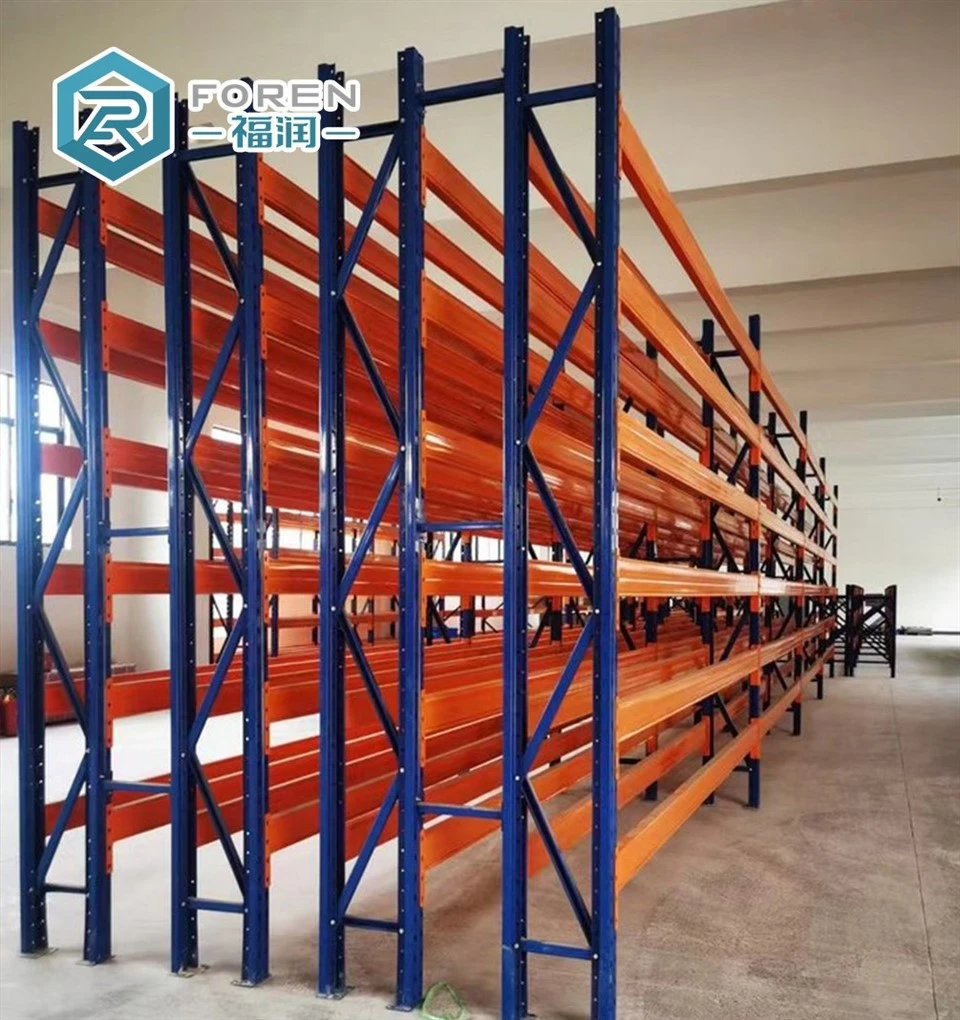
Beam racking, is one of the most practical storage solutions for modern industrial and commercial warehouses. Unlike specialized rack systems built for single-scenario use, this pallet-based racking fits nearly all warehouse sizes and most common storage demands. Its widespread adoption stems from three core traits: simple yet solid construction, flexible on-site adaptability, and cost-friendly operation. For businesses looking to standardize warehouse storage without excessive investment, beam racking is usually the first and most reliable option for daily palletized goods management.

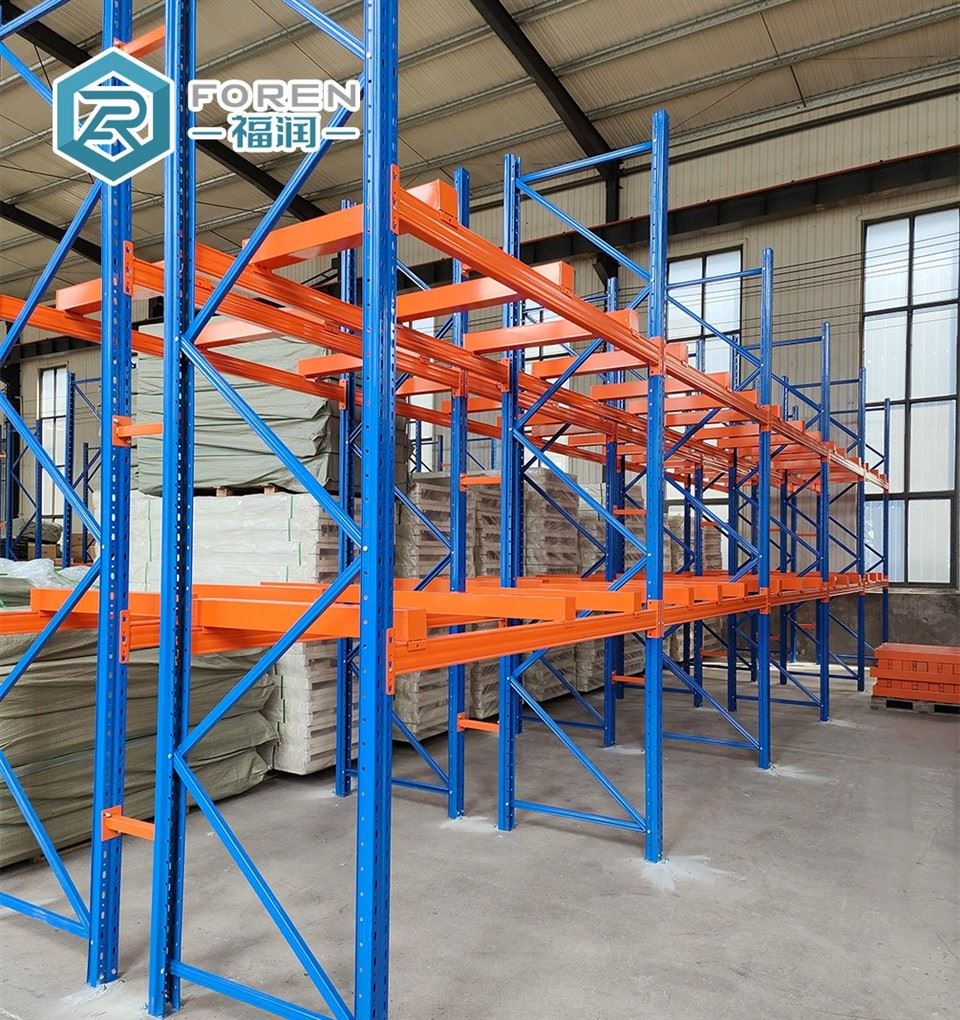
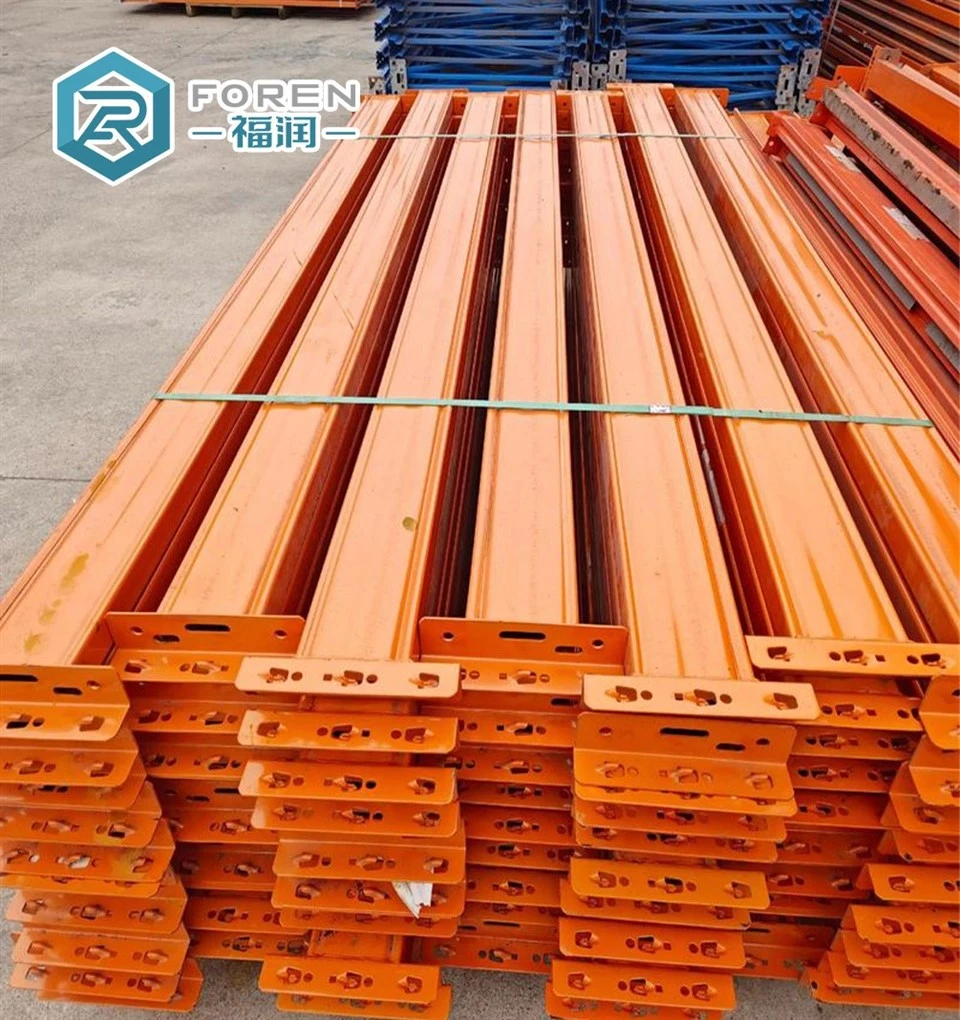
The entire beam racking system consists of 2 basic parts: upright frames and load beams. Each frame is assembled with columns, horizontal braces and diagonal braces, fixed tightly via bolts to maintain structural stability under long-term load. A key safety detail is the dedicated safety pin installed at every connection joint. This small but critical design effectively avoids accidental beam separation during daily forklift operations, solving one of the most common safety hazards in conventional racking systems.
Adjustability is another standout feature of beam racking. Users can freely adjust the beam height to easily adapt to different pallet sizes, cargo heights, and stacking standards. The system adopts a full modular structure, requiring no on-site welding. This means the racking can be installed, disassembled or rearranged freely according to actual warehouse layout changes, seasonal inventory adjustments or production line updates. For warehouses with frequently changing storage demands, this flexibility greatly improves overall space utilization efficiency.
In terms of load capacity and durability, beam racking outperforms many traditional warehouse racks. Made of high-strength steel, the system features a large moment of inertia and stable mechanical performance. Standard configurations support a maximum layer load of 5000kg, covering the storage needs of heavy industrial parts, bulk raw materials and full-pallet finished products. Warehouse working environments are always unpredictable: minor forklift collisions, long-term stacking pressure and frequent loading and unloading are unavoidable. Beam racking's excellent impact resistance prevents structural deformation and damage in these scenarios, extending service life and lowering long-term replacement costs.
Vertical space waste is a common problem for most warehouses that rely on floor stacking or light-duty simple racks. Beam racking effectively fixes this issue. Its uprights can be installed up to 12 meters in height, making full use of unused vertical space. Instead of expanding warehouse floor area, businesses can upgrade to beam racking to gain more storage capacity. It is a cost-efficient way to resolve tight storage space and low inventory turnover efficiency for both new and renovated warehouses.


Operational flexibility determines the daily efficiency of warehouse storage systems. Beam racking adopts an open selective structure, with no fixed rules for goods access order. Staff can store, pick and replenish goods randomly, which simplifies inventory checking and daily material management. Meanwhile, it is highly compatible with mainstream warehouse handling equipment, including ordinary forklifts and stackers. It fits most standard warehouse operation processes, requiring no special equipment or professional training for daily use.
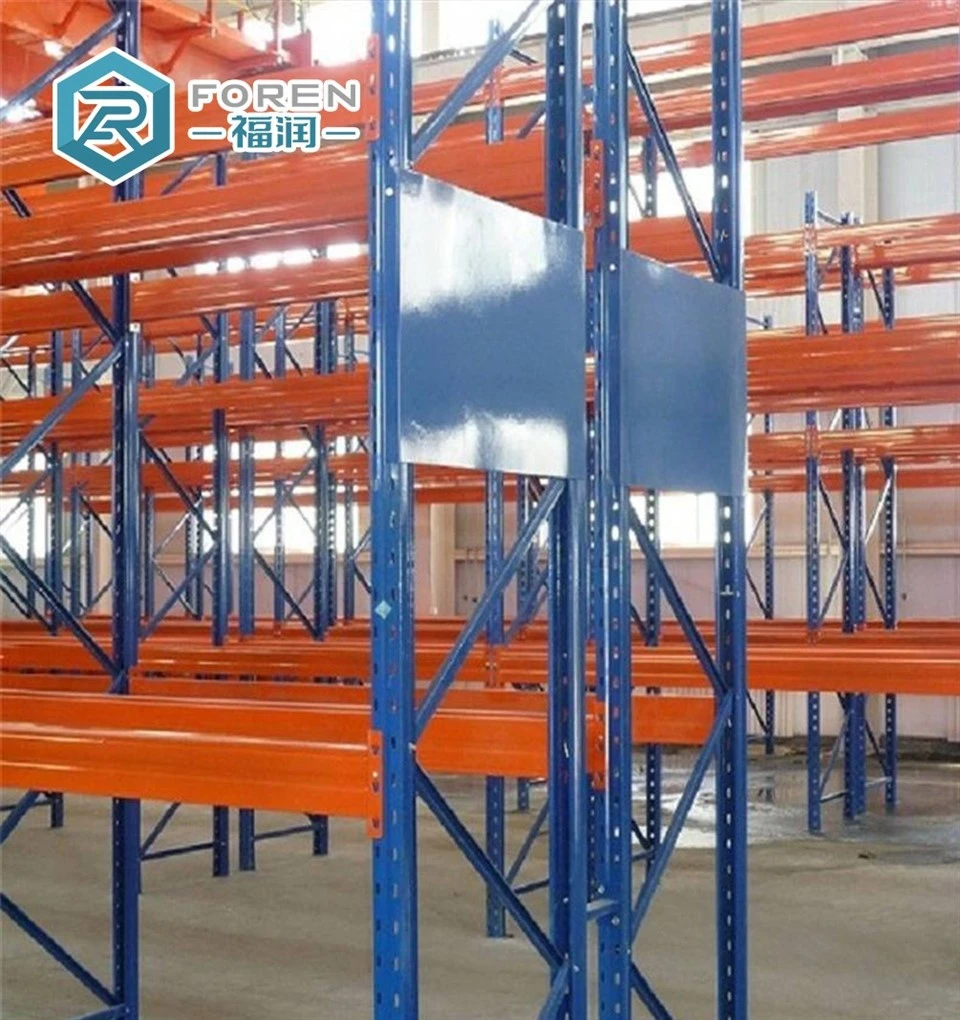
To meet diversified storage scenarios, beam racking supports a complete set of auxiliary accessories. Users can install steel plates, melamine boards or grid shelves on beams to store irregular pallets, scattered parts and small-batch goods. For on-site safety optimization, upright guards and anti-collision bars can reduce forklift impact on rack frames, while beam stops prevent pallet slipping. These optional configurations make the basic racking system more adaptable and safer for customized warehouse environments.
What makes beam racking highly cost-competitive is its strong scalability and low maintenance cost. Based on the basic beam racking frame, users can reconstruct or upgrade it into multiple professional rack systems. The system can be upgraded synchronously with business expansion, avoiding repeated equipment investment. In daily use, it features low failure rates and simple maintenance. Compared with professional heavy-duty storage equipment, it has lower upfront investment and long-term operating costs, delivering stable economic benefits for long-term warehouse operation.
Thanks to its versatile performance, beam racking has been widely applied across multiple industries. In light industry, it is commonly used for storing electronics, home appliances, communication devices, precision instruments, furniture and apparel, suitable for medium and light-weight finished goods and raw materials. In heavy industry fields such as automobile manufacturing and tire processing, it undertakes the storage of heavy mechanical parts and bulk palletized materials. It is also standard equipment for supermarket warehouses and logistics distribution centers, perfectly matching the high-frequency turnover, classified storage and fast inbound and outbound demands of modern logistics.

Overall, beam racking is a mature, practical and cost-effective warehouse storage solution. It balances structural stability, load capacity, flexibility and usability, fully adapting to the standardized and efficient management requirements of modern warehouses. Whether for new warehouse construction, old warehouse renovation, storage capacity expansion or standardized inventory management, beam racking is a reliable and applicable choice for most industrial and commercial storage scenarios.
Hot Tags: beam racking, China beam racking manufacturers, suppliers, factory, pipe stainless, ss steel, Stainless Steel Laser Cutting Part, Stainless Steel Pattern Plate, stainless steel processed products, steel and stainless steel