

Can a barrel water filling line be used for filling viscous liquids? That's a question I've been getting a lot lately, and as a supplier of Barrel Water Filling Line, I'm here to break it down for you.
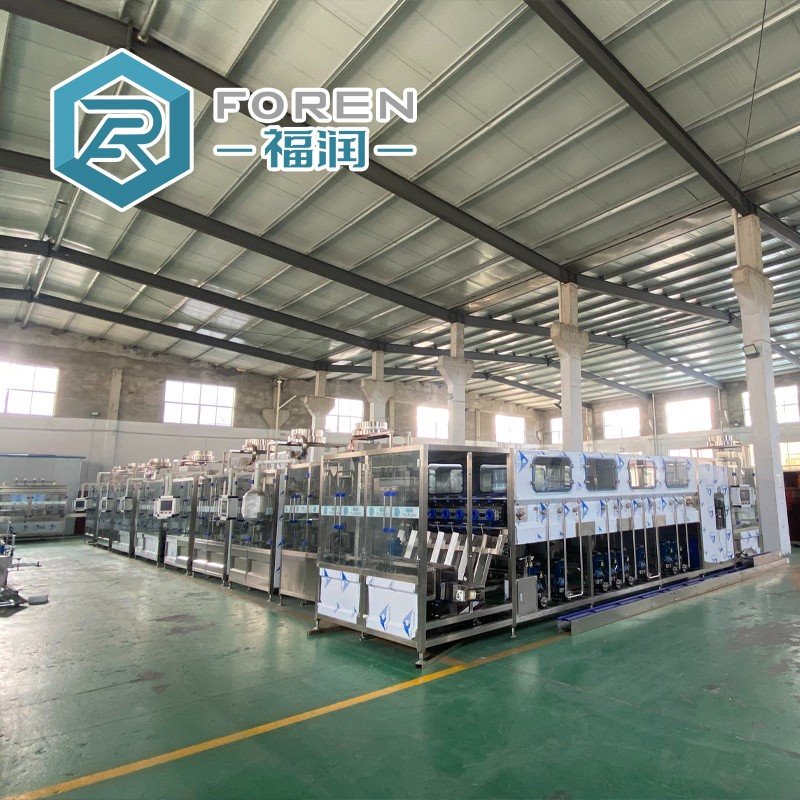
First off, let's talk about what a barrel water filling line is. It's a system designed to fill large barrels with water efficiently and accurately. These lines typically include components like a conveyor system, filling nozzles, and a control unit to manage the filling process. They're optimized for water, which is a low - viscosity liquid. Water flows easily, and the filling line is calibrated to handle its properties.
Now, when it comes to viscous liquids, things get a bit more complicated. Viscous liquids, like honey, syrup, or thick oils, have a higher resistance to flow compared to water. This means that the same filling line that works great for water might not work as well for these thicker substances.
One of the main issues is the flow rate. A barrel water filling line is set up to fill water at a certain speed. Viscous liquids flow much slower, so the filling time would need to be adjusted. If you try to use the same settings as for water, you might end up with incomplete fills or spills.
Another problem is the filling mechanism. The nozzles on a barrel water filling line are designed for the smooth flow of water. Viscous liquids can clog these nozzles, leading to inconsistent fills and potential damage to the equipment. For example, if honey gets stuck in the nozzle, it can harden and block the flow, requiring frequent cleaning and maintenance.
However, that doesn't mean it's impossible to use a barrel water filling line for viscous liquids. With some modifications, it can be done.
Modifications for Filling Viscous Liquids
1. Changing the Filling Nozzles
You can replace the standard nozzles with ones that are better suited for viscous liquids. These nozzles usually have a larger opening to allow the thick liquid to flow more easily. Some nozzles are also designed with special features, like anti - drip mechanisms, to prevent the viscous liquid from dripping after filling.
2. Adjusting the Pump
The pump on a barrel water filling line is designed to handle the low - viscosity of water. For viscous liquids, you may need to upgrade to a more powerful pump. A pump with a higher pressure can push the thick liquid through the system more effectively.
3. Heating the Liquid
In some cases, heating the viscous liquid can reduce its viscosity. This makes it flow more like water and easier to fill. However, this requires additional equipment, such as a heating chamber, and careful temperature control to avoid damaging the liquid or the equipment.
4. Modifying the Conveyor System
Viscous liquids can be more difficult to handle on the conveyor. You might need to adjust the speed of the conveyor to ensure that the barrels are filled properly. Also, you may need to add some additional guides or supports to prevent the barrels from tipping over during the filling process.
Advantages of Using a Modified Barrel Water Filling Line for Viscous Liquids
If you can successfully modify a barrel water filling line for viscous liquids, there are some advantages.

Cost - Effective
Buying a brand - new filling line specifically for viscous liquids can be expensive. Modifying an existing barrel water filling line can be a more cost - effective solution, especially for small to medium - sized businesses.
Familiarity
Your operators are already familiar with the barrel water filling line. With some training on the modifications, they can quickly adapt to filling viscous liquids, reducing the learning curve.
Limitations
Despite the possible modifications, there are still some limitations.
Limited Capacity
The modified line may not be able to handle the same volume as a dedicated viscous liquid filling line. The filling speed may be slower, which can affect the overall production capacity.
Maintenance
Viscous liquids can be more difficult to clean from the equipment. This means more frequent maintenance and potentially higher maintenance costs.
Real - World Examples
Let's say you have a small honey producer. They currently have a 120bph Barrel Water Filling Equipment that they use for filling water. They want to start filling honey into barrels. By modifying the nozzles, upgrading the pump, and adding a heating system, they can use the existing equipment to fill honey. However, they may find that the filling speed is slower compared to when they were filling water, and they need to clean the equipment more often.
On the other hand, a large - scale oil producer might find that modifying a barrel water filling line is not sufficient for their high - volume production. They may need to invest in a dedicated viscous liquid filling line to meet their production needs.
Conclusion
So, can a barrel water filling line be used for filling viscous liquids? The answer is yes, but with some modifications and limitations. It can be a viable option for small to medium - sized businesses looking for a cost - effective way to fill viscous liquids. However, for large - scale production, a dedicated viscous liquid filling line may be a better choice.
If you're considering using a barrel water filling line for viscous liquids or need more information about our Barrel Water Filling Line and its possible modifications, don't hesitate to contact us for a detailed discussion. We're here to help you find the best solution for your filling needs.
References
- Principles of Fluid Mechanics in Industrial Filling Systems
- Handbook of Liquid Filling Equipment Design and Operation