

Installing a barrel water filling line is a significant step for businesses in the water bottling industry. As a leading supplier of barrel water filling lines, I understand the importance of a smooth installation process. In this blog, I'll guide you through the key steps of installing a barrel water filling line, ensuring that you can set up your production facility efficiently and effectively.
Pre - installation Preparations
Before you start the installation, it's crucial to make comprehensive preparations. First, you need to choose a suitable location for the filling line. The area should be large enough to accommodate the entire line, including the filling machine, conveyor belts, and storage areas. It should also have a stable floor to support the heavy equipment.
Next, check the utility connections. Ensure that there is a reliable water supply with the appropriate pressure and quality. The water source should be clean and free from contaminants. You'll also need a stable power supply to run the machinery. Electrical requirements should match the specifications of the filling line.
It's also advisable to have a detailed layout plan. This plan should show the placement of each component of the filling line, including the filler, capper, and labeling machine. Consider the flow of barrels through the line to minimize bottlenecks and ensure a smooth production process.
Unpacking and Inspection
Once the barrel water filling line arrives at your facility, carefully unpack the equipment. Check for any visible damage during transit. Inspect all the components, including the filling nozzles, valves, and conveyor belts. Make sure that all parts are present and in good condition.
If you find any damaged or missing parts, contact our customer service immediately. We'll arrange for replacement parts as soon as possible to minimize downtime.
Assembly of the Filling Line
The assembly process is a critical stage. Start by assembling the main frame of the filling line. Follow the detailed installation manual provided with the equipment. Use the appropriate tools to ensure that all connections are secure.
Connect the conveyor belts. Make sure they are properly aligned and tensioned. The conveyor belts should move smoothly to transport the barrels through the different stages of the filling process.
Install the filling machine. This involves connecting the water supply pipes, control cables, and other necessary components. Ensure that the filling nozzles are correctly installed and calibrated to dispense the right amount of water into each barrel.
The capping machine is another important part of the line. Install it in the appropriate position and connect it to the power supply. Adjust the capping mechanism to ensure that it can tightly seal the barrels.
Electrical and Control System Setup
The electrical and control system is the brain of the filling line. Connect all the electrical components according to the wiring diagram. Make sure that all connections are secure and insulated to prevent electrical hazards.
Program the control system. This involves setting the filling volume, capping pressure, and other parameters. Our filling lines come with user - friendly control panels that allow you to easily adjust these settings. If you have any questions during the programming process, our technical support team is always ready to assist you.
Testing and Calibration
After the assembly and electrical setup, it's time to test the filling line. Start by running a dry test without water. Check the movement of the conveyor belts, the operation of the filling nozzles, and the capping mechanism. Make sure that all components are working properly.
Next, conduct a wet test. Fill the water tank and start the filling process. Monitor the filling volume of each barrel. If there are any discrepancies, adjust the filling nozzles or the control settings accordingly.

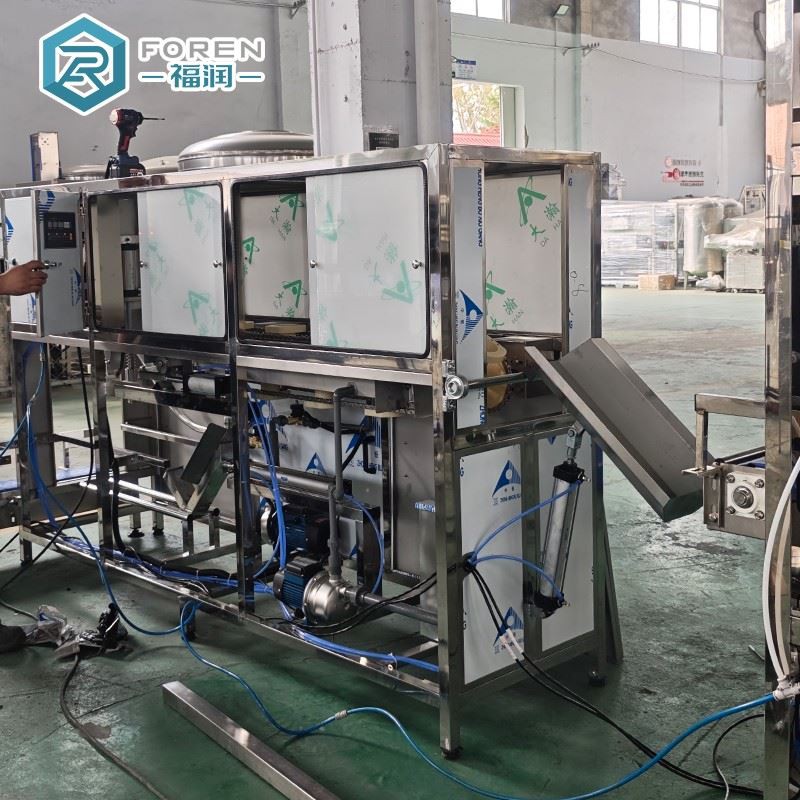
Calibrate the capping machine to ensure that the caps are tightly sealed. Check the sealing quality of several barrels to make sure that the capping process is consistent.
Training for Operators
Once the filling line is installed and tested, it's essential to train your operators. Our company provides comprehensive training programs for operators. The training covers the operation of the filling line, basic maintenance, and troubleshooting.
Operators should learn how to start and stop the line, adjust the settings, and perform routine maintenance tasks. They should also be familiar with safety procedures to prevent accidents during operation.
Maintenance and Support
Regular maintenance is crucial to keep the barrel water filling line in good working condition. We recommend creating a maintenance schedule that includes tasks such as cleaning the filling nozzles, lubricating the moving parts, and checking the electrical connections.
Our company offers ongoing technical support. If you encounter any problems with the filling line, our technical experts are available to provide remote assistance or on - site support if necessary.
Related Products
If you are interested in other water filling solutions, we also offer 120bph Barrel Water Filling Equipment, Bottle Water Filling Line, and Disposable Bucket Water Filling Machine. These products are designed to meet different production needs and can be customized according to your requirements.
Conclusion
Installing a barrel water filling line requires careful planning, proper assembly, and thorough testing. As a supplier, we are committed to providing you with high - quality equipment and comprehensive support throughout the installation process. If you are considering purchasing a barrel water filling line, we encourage you to contact us for more information and to discuss your specific needs. Our team of experts will be happy to assist you in setting up your production facility and ensuring a successful operation.
References
- Manufacturer's installation manual for barrel water filling lines.
- Industry standards for water bottling equipment installation and operation.