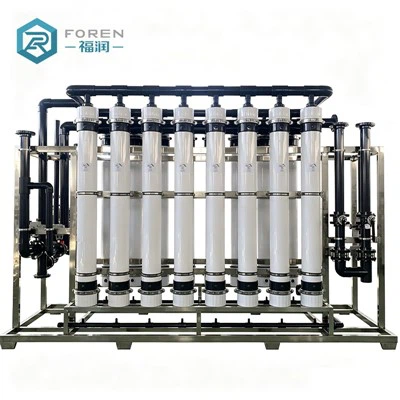

Fully automatic water softening equipment effectively reduces water hardness, removes insoluble impurities, and reduces scale buildup. After a period of use, the resin in water softening equipment needs to be replaced to maintain its softening capacity. However, many users don't know how to determine if the resin needs replacement. The following is a simple explanation:
1. Excessive Water Hardness (Core Judgment) If the water hardness consistently exceeds 0.03 mmol/L, increasing the amount of regeneration salt, extending the regeneration time, and readjusting equipment parameters may not lower the hardness.
Symptoms: Scale easily forms when boiling water; scale quickly forms on the heating tank, pipes, and the filter before the RO membrane.
Note: First rule out insufficient salt in the salt tank, blockage in the salt suction line, and malfunction of the multi-way valve. Only after confirming that it is not an equipment adjustment issue should you determine that the resin has failed.
2. Resin Appearance Open the manhole of the resin tank:
Severely Broken Resin: A large amount of broken resin is present, with a large amount of fine yellowish-brown powder at the bottom of the tank. A large amount of fine resin particles are lost during backwashing.
Color Changes: New resin is golden yellow/light yellowish-brown; aged, iron-poisoned resin turns dark brown or blackish-brown, contaminated with iron ions.
Clumping: The resin compacts and clumps, resulting in very low backwash expansion height, deviated water flow, localized short circuits, and uneven regeneration.
3. Deteriorating Regeneration: Even with significantly increased salt levels, the softening effect remains poor.
The effluent is cloudy and yellow during backwashing, and repeated rinsing fails to clarify it-a typical symptom of iron poisoning. The pressure difference in the resin tank increases significantly, with a noticeable rise in the inlet and outlet pressure difference and a decrease in water flow.
4. Iron Poisoning (Common in Groundwater and Spring Water): High iron and manganese content in the influent leads to iron contamination of the resin:
Characteristics: The resin turns black, regeneration is completely ineffective, and even with increased salt levels, the effluent hardness remains unacceptable. Mild iron poisoning can be treated with soaking and cleaning with a reducing agent; severe contamination is ineffective with cleaning, requiring direct resin replacement.
5. Simple Troubleshooting Steps (Practical Procedure, Can Also Be Used to Explain to Customers)
First, check: Is the salt supply sufficient? Is the brine suction line clogged? Are the regeneration time settings on the multi-way valve correct? Is the backwash flow rate correct?
Manually force regeneration 2-3 times, then test the hardness of the effluent.
If the hardness still exceeds the standard after adjustments and multiple regenerations, open the tank and check for resin breakage and discoloration.
After ruling out valve and pipeline faults, confirm that the resin is ineffective and replace it.

Supplementary Differentiation: Resin Ineffectiveness vs. Equipment Failure
❌ Do not replace the resin immediately upon seeing scale buildup in the effluent: Often, the problem stems from multi-way valve malfunction, insufficient brine suction, or incorrect regeneration time settings, not a resin issue.