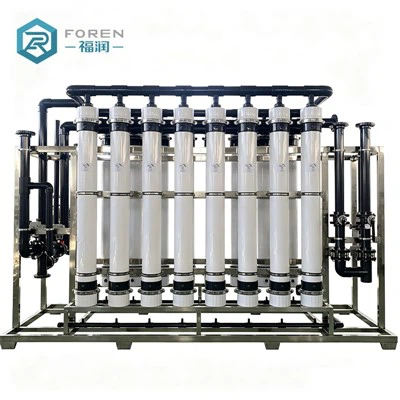

At Qingzhou Foren Water Treatment Equipment Co., Ltd., we deliver complete water treatment and filling systems to clients across China and around the world. Year after year, we have seen how unexpected cold snaps and freezing winters can damage production lines. Whether it is a long cold season in northern zones, high-altitude sites, or overseas locations with sharp night-time temperature drops, freeze damage often strikes without warning.
Insulation wrapping forms the foundation of freeze protection. For sites with sustained extreme cold, self-regulating heat tracing can be added as supplementary protection. Draining all standing water once the system shuts down remains the most critical step of all. Valves, filters and flow meters are the most vulnerable spots, and most freeze-related failures happen at these instrument points.
Pipes for raw water, treated water and permeate water carry liquid continuously. When water freezes, it expands and generates pressure that can crack UPVC, PPR and stainless steel piping, membrane housing connectors and pressure gauge bases. A simple freeze event can ruin expensive components and bring the whole plant to a halt.


Insulation materials should be selected according to site conditions. Rubber foam insulation is our most common option, ideal for pump rooms, indoor workshop piping or short-term exposed outdoor runs. We normally specify 20–30 mm thickness. It is flame-retardant, moisture-resistant and comes with adhesive backing. After wrapping, all seams must be sealed with tape. It is not suitable for permanent outdoor exposure under direct sunlight, as UV rays speed up ageing; an outer protective cladding is mandatory if installed outdoors.
Pre-fabricated polyurethane insulated pipes work well for long buried or overhead main pipelines inside plant yards. They come as an integrated assembly with PE or metal outer shells and deliver stable thermal performance for trunk lines.
Rock wool and glass wool are only recommended for lines paired with high-temperature heat tracing. We avoid using them on regular cold water piping. Humidity inside water treatment workshops stays high, and these materials lose insulating capability quickly once soaked by moisture.
An outer protective layer is essential. After rubber foam is fitted, wrap the surface with aluminium foil tape. For outdoor pipe runs, add 0.5–0.6 mm colour steel sheet or aluminium cladding to shield the insulation from rain, snow and wind. If moisture seeps inside the insulation, it stops working entirely.
During installation, make sure fittings, flanges, valves, Y-strainers, rotameters, gauge connections and membrane housing joints are fully wrapped. Many installers only insulate straight pipe sections and overlook valves and instruments, which are exactly where cracks tend to develop.

From our years of on-site commissioning experience, we have sorted out three practical protection strategies for different operation schedules.
The first method is insulation-only protection. It applies to indoor pump rooms and pipelines with continuous running water. Clean the pipe surface before applying rubber foam, seal seams tightly with foil tape, and cover valves individually with pre-formed insulation shells or extra foam. Keep pump room doors and windows closed to block cold air and try to maintain ambient temperature above 0 ℃. Reduce ventilation overnight. Operators should carry out regular inspections to check for torn, waterlogged or loose insulation before cold weather arrives.
The second method combines insulation with self-regulating heat tracing. It is widely adopted for exposed outdoor piping, intermittently operated lines, RO permeate pipelines and small instrument tubing, and many of our clients in cold overseas regions choose this setup. Self-regulating heating cables adjust heat output automatically and will not overheat and damage UPVC or PPR plastic pipes. Attach the cable to the lower half of the pipe and secure it with foil tape, then add insulation and outer cladding. A thermostat controls the circuit: it powers on below 5 ℃ and cuts off above 10 ℃ to save power. Extra cable should be wrapped separately around valves, flow meters and pressure gauges, with slack reserved for future maintenance. Use waterproof, explosion-proof junction boxes matched for humid water treatment environments, together with residual current protection devices. We want to stress this clearly: draining trapped water always comes first. Heat tracing serves only as backup protection. It stops working once power fails and cannot be relied on alone.
The third method is complete draining on shutdown. It must be carried out during maintenance, long idle periods or overnight stops and holds the highest priority. For UF, RO and integrated filling water systems that will sit idle: close the main inlet valve, open low-point drain valves and high-point air vents to empty all water from the circuit. Drain filter housings, membrane vessels, pump cavities and small branch tubes one by one. After draining, crack relevant valves slightly to eliminate hidden water pockets. Tiny sample tubes and gauge impulse lines trap residual water easily and are prone to cracking, so they require separate draining and verification.
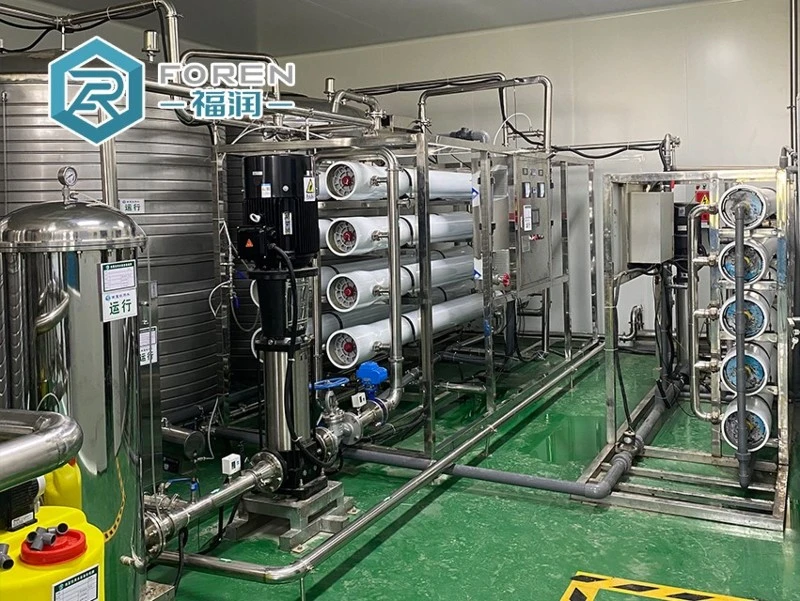
At Qingzhou Foren Water Treatment Equipment Co., Ltd., we supply custom RO, nanofiltration, barrel and bottled water filling turnkey packages for domestic and global customers. We have witnessed costly equipment downtime caused by inadequate winter protection on countless projects. This guide is built from our hands-on site experience, aiming to help plant operators around the world run smoothly through cold seasons and cut unnecessary repair losses. If you are planning a water treatment project for cold-climate locations, feel free to reach out to us for tailored solutions.