
In my work supporting industrial water treatment projects, I've noticed most cities have built complete reclaimed water pipeline networks nowadays. Factories can adopt reclaimed water for circulating cooling, equipment washing and process makeup water, effectively cutting tap water consumption and boosting overall water resource efficiency.
Even so, municipal reclaimed water only receives basic preliminary treatment. If factories put it into production directly, they will frequently face pipe blockages, severe equipment scaling and unstable water quality that fails production requirements. In my years of technical practice, I always recommend the ultrafiltration plus reverse osmosis dual-membrane deep treatment process, which has proven to be a mature, mainstream technology to realize steady reclaimed water recycling for manufacturers.

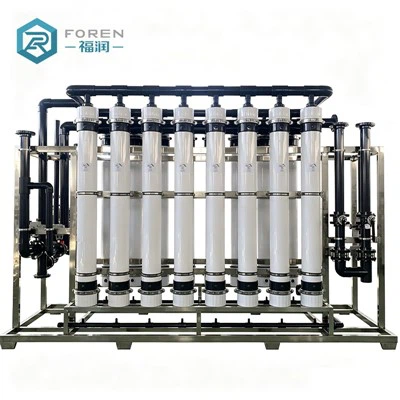
Let me break down how these two membrane units work respectively. Ultrafiltration serves as the front-end pretreatment step. It intercepts suspended solids, colloids and macromolecular contaminants in reclaimed water to stabilize incoming water quality. More importantly, it prevents fouling and physical damage to subsequent reverse osmosis membranes, laying a solid foundation for long-term stable running of the whole water treatment system.
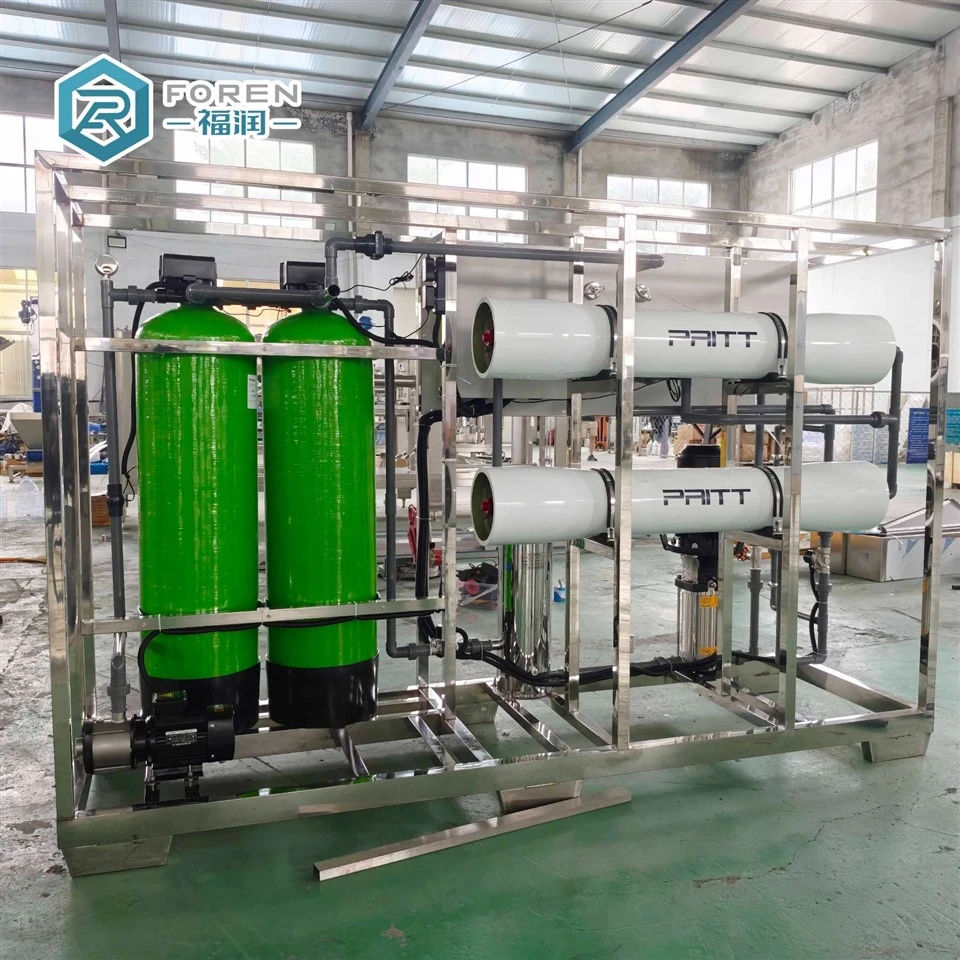
As the core deep desalination and polishing unit, reverse osmosis removes calcium & magnesium ions, dissolved solids and small-molecule organics. It optimizes critical parameters including water hardness and conductivity, delivering consistent, high-purity effluent fit for diverse industrial applications. This fundamentally curbs scaling and clogging issues across production pipelines and facilities.
From my practical project experience, adopting this dual-membrane system brings tangible benefits to manufacturing clients. First, water quality stays adjustable and compliant with cooling, cleaning and process water standards, insulating production from fluctuations in raw reclaimed water quality. Second, it minimizes scaling and corrosion inside pipelines and heat exchangers, prolonging equipment service life and slashing routine maintenance expenses.
Besides, raising reclaimed water substitution rate lowers fresh water withdrawal, helping enterprises meet water-saving and environmental regulations smoothly and pass official water conservation assessments with ease. Less chemical dosing and less frequent membrane cleaning also translate into noticeable long-term operational savings. With modular, flexible layout design, the dual-membrane setup fits perfectly for newly-built water reuse projects as well as retrofits of existing on-site wastewater treatment systems.
This solution is widely applicable for enterprises with large-volume reclaimed water demands, covering thermal power, chemical engineering, textile, food processing, mechanical fabrication and coating sectors.
In summary, after years of on-site application, I firmly believe the two-stage synergistic purification design of UF and RO can upgrade ordinary municipal reclaimed water up to qualified industrial reuse standard. It helps enterprises cut water costs while satisfying policy compliance, making it an efficient, reliable technical route for industrial water recycling and sustainable low-carbon development.