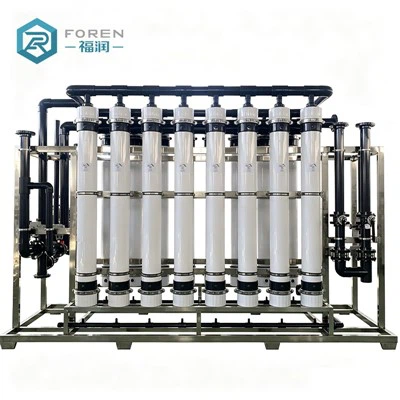

Reverse osmosis (RO) equipment is the core water purification device widely used in industrial water treatment and pure water production fields. Based on pressure driving and semi-permeable membrane separation principle, it can effectively remove salts, colloids, microorganisms and suspended impurities from raw water. Many customers feel confused when choosing between single-stage RO system and double-stage RO system. These two types of water treatment equipment differ greatly in hardware configuration, process flow, effluent water quality and applicable industries. Customers can select the most suitable water purification solution according to actual raw water quality and water demand.


In terms of hardware configuration, single-stage RO equipment is equipped with one vertical high-pressure booster pump. After pretreatment, raw water completes one-time desalination and purification through a single group of RO membrane elements. In contrast, double-stage RO equipment is fitted with two independent high-pressure booster pumps. It adds a secondary RO filtration unit based on the single-stage system, which means the primary produced water will be pressurized and purified again for deep impurity removal, perfectly matching high-purity water production requirements.
For operational processes, the single-stage RO system features a compact process flow and low maintenance difficulty. After pretreatment and security filtration, raw water is pumped into RO membranes for one-step purification. With simple pipeline layout and convenient operation, it requires little daily maintenance and replacement of consumables. The double-stage RO adopts two-stage series purification technology. The water produced by the first-stage RO will be sent to the second-stage RO system for secondary deep filtration. This two-time membrane separation process greatly improves water purification depth and enhances adaptability to fluctuating raw water quality.
Water quality is the most critical difference between the two systems. Under standard working conditions, the effluent conductivity of single-stage RO equipment is stably controlled at 10-20μS/cm, with reliable desalination performance to meet most conventional industrial water standards. Benefiting from double deep purification, double-stage RO system can reduce the effluent conductivity to below 5μS/cm, with extremely low residual ion content and much higher water purity.
They are applied to different industrial scenarios respectively. Single-stage RO systems are widely used in barreled water production, textile printing and dyeing, cooling water replenishment, general food processing, commercial drinking water and painting cleaning, meeting demands of conventional industrial pure water supply. Double-stage RO systems are suitable for scenarios with strict water quality requirements, including pharmaceutical purified water, electronic component cleaning water, high-pressure boiler feed water, fine chemical process water and seawater pretreatment desalination.
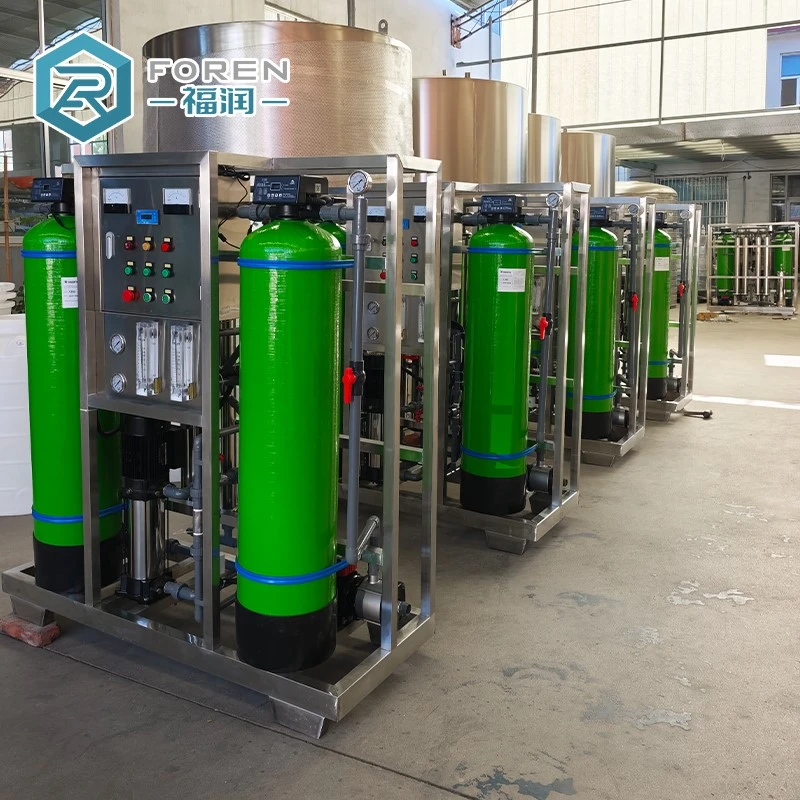
Both two RO systems support automatic continuous operation without chemical regeneration, causing no secondary pollution during operation. The double-stage RO system has higher water recovery rate and more intelligent automatic control system, while it needs higher initial investment and power consumption. To sum up, customers can make choices simply based on raw water quality and required effluent standard: choose single-stage RO for qualified raw water and ordinary water demand with limited budget; choose double-stage RO for poor raw water quality or high-purity water requirements.
Reasonable selection of reverse osmosis equipment ensures stable qualified water supply, reduces long-term operation and maintenance costs, and maximizes the overall economic benefits of the water treatment system.