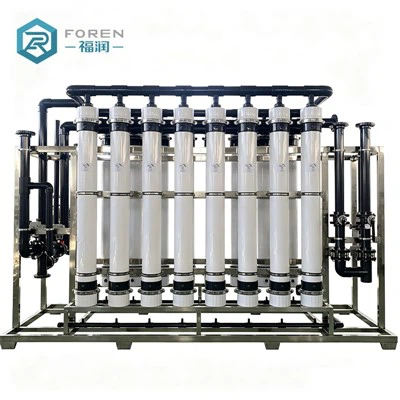

Water softeners serve as core water treatment equipment that eliminates calcium and magnesium ions to reduce water hardness and inhibit limescale. Widely applicable to industrial, commercial, domestic, agricultural and special scenarios, it resolves pipe blockage, equipment abrasion and scaling troubles. With stable performance and low operating cost, it optimizes product quality and extends the service life of water-consuming facilities.
Industrial Application
As essential pretreatment equipment for production and heating systems, softeners cover multiple manufacturing sectors.
Steam boilers, hot water boilers and thermal oil heaters require softened feedwater. Hard water accumulates stubborn scale inside pipelines and boiler bodies, reducing thermal efficiency, increasing fuel consumption and triggering overheating or pipe burst hazards. Softened water eliminates such risks, cuts maintenance costs and ensures sustained safe operation.
Circulating cooling systems for central air conditioners, cooling towers, air compressors, injection molding and hydraulic equipment adopt softened water to maintain heat exchange efficiency, avoid pipe clogging and minimize downtime for upkeep.
In zinc plating, nickel plating, anodizing and electrophoretic surface treatment, hard water contaminants result in pinholes, water marks and uneven coatings. Softened water delivers smooth, bright finished layers and raises product yield.
Purified water, bottled drinks, juice, beer and dairy food production relies on softened process water for manufacturing and equipment cleaning. It prevents scaling on machinery, stabilizes product flavor and prevents deterioration from hard water impurities.
During textile spinning, weaving, dyeing and washing, softened water keeps fabrics from hardening and uneven staining, improves dye utilization and softens finished textiles. For fine chemicals, daily chemicals and coatings production, it stabilizes material blending and reactor reactions to avoid precipitation and stratification. Paper mills use it in pulp cleaning and spraying to reduce surface defects and protect precision rollers.

Commercial Field
Hotels, resorts, bath centers and swimming pools deploy softeners for domestic hot water, sauna circulation and pool water replenishment. It prevents scale on water pipes, heaters and shower fittings, while delivering gentler bathing experiences to enhance customer satisfaction.
Office buildings and shopping malls equip central air-conditioning water cooling units with softeners to cut energy use, stabilize operation and lower fault rates. Professional laundries wash linens with softened water to reduce soap residue, prevent fabric yellowing and stiffness, save detergent and prolong washer lifespan. Hair and beauty salons install compact units to relieve dry hair and rough skin caused by hard water and improve service quality.
Household & Real Estate Use
Residential central heating, underfloor heating and wall-mounted household boilers use softened water to protect heating coils and heat exchangers, preventing insufficient heating, extra energy waste and equipment breakdowns caused by scale.
Whole-house softeners are mainstream household water treatment solutions. They supply standard softened water for bathing, laundry and daily cleaning, reduce scale deposits on sanitary ware and clothing, and upgrade domestic water quality.
Agriculture & Special Scenarios
In agriculture, the equipment supports greenhouse planting, soilless cultivation and irrigation for fruits, vegetables and flowers, preventing dripper and micro-sprinkler blockage and boosting crop nutrient absorption and growth. For livestock breeding, it improves drinking water quality, protects water supply pipelines and promotes animal health.
Hospital laboratories use softened water as pretreatment for pure water systems to meet medical cleaning standards and protect precision testing instruments. It also provides pretreatment water for laser cutting, vacuum coating, heating station heat exchange, water parks and swimming pool projects.

Product Features & Operation Notes
The device only removes calcium and magnesium ions to lower hardness and cannot filter residual chlorine, heavy metals and other pollutants. It is usually paired with pre-filters and activated carbon devices to achieve comprehensive water purification.
A fully automatic softener consists of resin tank, cation exchange resin, automatic control valve, brine tank and auxiliary pipelines. It adopts dedicated softening salt for resin regeneration, requiring only regular salt replenishment with minimal maintenance and low running costs. Fully automatic operation fits small, medium and large-scale water treatment projects in all industries.