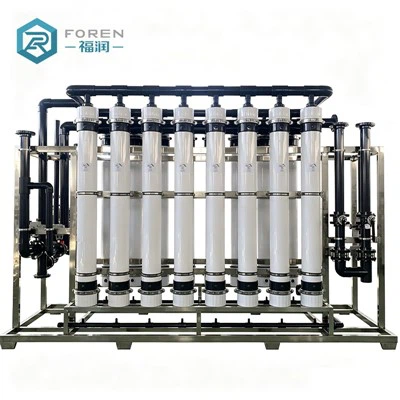

Conductivity is a key indicator of water purity, and EDI (electrodeionization) equipment regulates conductivity through a combination of electric fields and ion exchange membranes. When the raw water conductivity is high, a model with stronger processing capacity is required, typically manifested by a larger membrane area or a longer purification path.
Common Application Scenarios Analysis
Laboratory Water: Requires conductivity ≤0.1μS/cm, requiring a polished-grade EDI module.
Pharmaceutical Industry: Conductivity controlled within the range of 1-5μS/cm, suitable for standard medical-grade models.
Electronic Cleaning: Requires specific water quality of 10-15μS/cm, adjustable EDI equipment can be selected.
Three Golden Rules for Selection
Consider Fluctuations: When raw water conductivity fluctuates by more than 30%, a wide-range adaptive model is recommended.
Calculate Total Capacity: Select module processing capacity based on average daily water consumption × 2.
Allow Overhead: The actual selected capacity should be 20% larger than the calculated value to cope with sudden demand.