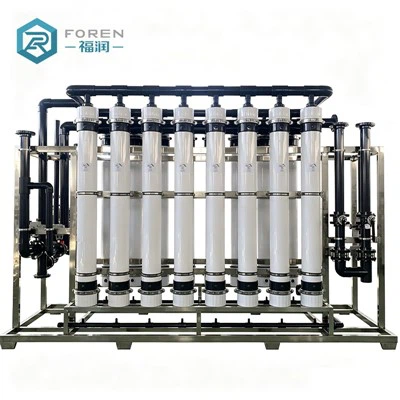

Water treatment equipment is a must-have for almost all industrial plants and commercial operation sites. The water quality your facility uses directly affects your finished product quality, production efficiency and overall operating costs. Choosing the right large-scale water treatment system makes all the difference for steady water supply, better budget control and fewer maintenance headaches down the line. Most buyers only look at water capacity when shopping around, but skip many practical key details. This simple mistake often leads to mismatched units, poor water quality and constant equipment troubles after installation.
Start with your actual on-site water needs first. Figure out exactly what water quality standards your production process requires. This basic info lets you pick the right equipment model and proper configuration. Match the equipment output and water tank size to your daily water usage, so you don't waste money on oversized gear or risk production stops from not having enough water on hand. Also, plan the inlet and outlet pipe positions based on your workshop layout and water consumption points, making installation and daily operation much easier for your team.
Don't overlook long-term running costs and official certifications. Take time to calculate daily power use, filter replacement fees and regular maintenance costs to get equipment that delivers real value for your budget. Always ask the supplier for complete qualification papers and valid water quality test reports. Trusted pure water systems fully comply with official drinking water regulations and come with qualified inspection documents, ensuring the treated water fits your industrial and commercial usage needs perfectly.

Tank build materials and internal filter setups determine how well the equipment works and how long it lasts. The most common tank materials are stainless steel, fiberglass, cast iron, aluminum alloy, food-grade resin and PVC. Stainless steel is always the best pick for main tanks thanks to solid pressure resistance and great corrosion protection, even though it costs a bit more. Fiberglass and cast iron work great for pre-filtration work, while food-grade resin and PVC are better for post-treatment and drinking water systems. Decide whether you just need regular water purification or professional water softening, then select the right filter media like PP cotton, activated carbon, softening resin, ultrafiltration membranes and RO reverse osmosis membranes to match your actual treatment needs.
Your local raw water condition is also super important when choosing equipment. If your local water is hard with high mineral levels, go for units fitted with ion exchange resin and softening modules to cut down water hardness. For areas with heavy industrial pollution and heavy metal contaminants, RO reverse osmosis systems with high-precision filtration are the best option to remove all unwanted impurities effectively.
Large pure water equipment needs professional on-site installation, commissioning, routine maintenance and quick fault repairs. Work with a supplier that offers full on-site setup, system debugging and timely after-sales support. A dependable local service team means faster repairs, less production downtime and stable water supply for your daily operations all year long.