

1. Pre-project Evaluation & Budget Planning
The very first thing we tell every new prospect is don't ask for a quotation before you have a proper raw water lab test report. I've met clients who skipped this step, locked in a line based only on their target output, and found out later their local raw water carries unusually high iron or manganese. Their standard RO setup could not handle it, forcing costly rework to add extra pretreatment tanks.
Alongside water testing, take time to dig into local rules. Permit requirements for food-grade water production, limits on wastewater discharge, and electrical grid capacity vary a lot from one country, even one region, to another. A line that works smoothly in one location might run into power shortages or strict drainage restrictions somewhere else.
Your planned hourly output also shapes nearly every part of the project. A small 1000 BPH line fits a modest workshop and lower power draw, while a 6000+BPH high-speed line demands reinforced flooring, heavier wiring, and a much larger footprint. We never finalize our layout suggestions until we know both your water analysis results and your realistic production goals.
2. Core Equipment of Complete Bottled Water Production Line
People often think a bottled water line is just a filling machine, but it is a linked system split into three functional groups: water treatment, bottle forming and filling packaging, plus supporting auxiliary gear.
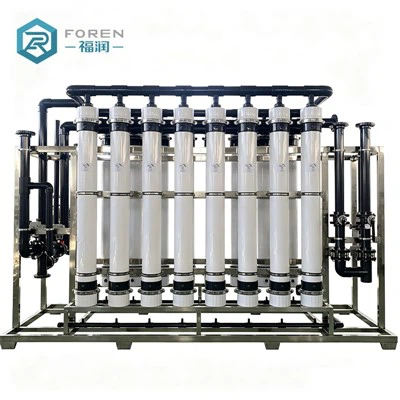
The water treatment train starts with a raw water tank and feed pump, followed by sand filtration, activated carbon, softener, security filter, reverse osmosis host and purified water storage tank. When working on mineral water projects where you need to retain beneficial mineral components instead of stripping everything out, we will add ultrafiltration and mineral balancing modules, case by case.
For the filling and packaging side, the main kit includes a PET blow molding machine, 3-in-1 rinse-fill-cap unit, air conveyor, lamp inspection bench, date printer, labeler, and shrink wrap or carton packing machine.
Auxiliary hardware should not be overlooked either: screw air compressor, chiller, ozone disinfection assembly, CIP cleaning circuit and central control cabinet. All surfaces that touch drinking water are built from food-grade 304 or 316 stainless steel. We settled on this standard after repeated feedback from our long-running plant customers, who told us cheaper alternative materials created ongoing water quality headaches.


3. Workshop Layout & Civil Construction Notes
Workshop zoning is where many self-planned projects fall apart. You need separate dedicated spaces: raw water intake zone, treatment room, bottle blowing area, sealed clean filling room, finished goods storage, packaging station, small on-site testing lab, and a hygiene buffer room for staff changing and sanitizing.
The filling clean room is non-negotiable. It needs purification airflow and scheduled sanitization routines to maintain hygiene standards. The floor needs epoxy coating that resists water and chemical corrosion, with a gentle slope built in so standing water does not pool. One mistake we see repeatedly is clients sizing power cables and water pipelines exactly to match the calculated load. When they ramp up production or add small upgrades later, they hit bottlenecks. That's why we consistently advise our customers to reserve roughly 20% extra capacity for power and piping.
4. Quality Control & Acceptance Standard
Water quality checks do not only happen once when the plant first opens. Testing should run through every stage. We advise clients to test incoming raw water regularly, keep live conductivity readings from the RO unit, and pull random samples of finished bottles for lab checks. Our standard package includes online conductivity and ozone sensors so your operators can catch drift in water quality before batches get compromised.
Before any machine leaves our Foren factory, our team runs dry cycles and full water trials. You will receive the test logs, assembly drawings, operation guides and a list of common spare parts. After shipment arrives at your site, our technicians travel out to carry out installation, commissioning, and hands-on training for your operators and maintenance crew. We prefer to train the people who will run the line day-to-day, rather than just hand over a manual.


5. After-sales & Long-term Operation Tips
Even the most robust production line depends on routine care. Filter cartridges, gaskets, spray nozzles and UV lamps wear out with continuous running and need planned replacement. Qingzhou Foren Water Treatment Equipment Co., Ltd. can ship spare parts internationally to keep your plant running without long downtimes.
From visits to live customer sites, here are a few simple practices that make a huge difference. Backwash pretreatment filters on a fixed schedule, run CIP cleaning cycles for RO membranes and filling pipelines periodically, and keep a simple notebook logging daily water quality readings. These small regular tasks help you avoid sudden unplanned shutdowns and extend the usable life of your whole line.

Final Words
Putting up a bottled water factory is far more than purchasing equipment. It ties together source water assessment, custom process design, equipment matching, clean room build, local regulatory filings and ongoing quality control.
At Qingzhou Foren Water Treatment Equipment Co., Ltd., we build custom turnkey bottled water production systems, covering water treatment and full packaging machinery. If you share your raw water lab report and production targets with us, we can work out a practical solution built around your specific site conditions.