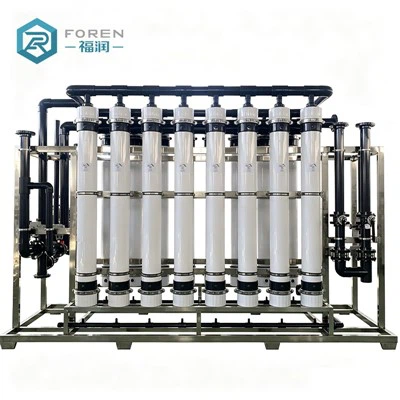

There are many reasons for low water production in reverse osmosis equipment. After the equipment has been operating for a period of time, the reverse osmosis membrane inevitably becomes fouled. If maintenance is not timely, suspended solids and dissolved substances will generally be present in the raw water. These pollutants will adhere to the reverse osmosis membrane, clogging the water flow channels of the membrane element, thus increasing the resistance when water passes through the reverse osmosis membrane. Simultaneously, when the dissolved substances exceed the saturation limit of the reverse osmosis membrane, precipitation will occur, forming a scale layer on the membrane surface. If daily maintenance is not timely, this will lead to a decrease in water production.

Several Reasons for Low Water Production from Reverse Osmosis Membranes:
1. Poor Raw Water Quality and Inadequate Pretreatment Backwashing:
If groundwater is used as the raw water, some groundwater is of very poor quality. Insufficient pretreatment backwashing and untimely replacement of the precision filter element will also lead to rapid fouling of the reverse osmosis membrane, resulting in a decrease in water production.
2. Operating Pressure:
Different models of reverse osmosis membranes require different operating pressures. Appropriately increasing the inlet water pressure according to the actual situation can increase the water production.
3. Inappropriate Operating Temperature:
The operating temperature of a reverse osmosis membrane is generally 25℃. When raw water is added, a decrease of approximately 3℃ in operating temperature will reduce the permeate flow of the reverse osmosis membrane element by about 10%.
4. Fluctuations in Operating Pressure:
Different reverse osmosis membranes have different applicable operating pressures. Fluctuations in operating pressure may occur after replacing the membrane element, or due to contamination or improper operation during operation. In such cases, simply adjust the equipment's operating pressure to the optimal pressure setting for the currently used reverse osmosis membrane product.
Solutions:
1. Quartz sand filters and activated carbon filters should be backwashed daily. If the raw water quality is very poor, backwashing should be performed multiple times daily.
2. Precision filter cartridges should be replaced promptly. Generally, cartridges should be replaced every 3 months. If the raw water quality is very poor, replacement should be performed every few days or every ten days.
3. Insufficient or excessive antiscalant dosage will cause changes in permeate flow. Too much antiscalant will clog the reverse osmosis equipment; too little will not have an antiscaling effect. Therefore, the dosage of scale inhibitor should be calculated based on the dosage data provided by the manufacturer and the quality of the raw water.

If you need to purchase reverse osmosis equipment, you can contact us through the contact information on our website.