

Working in the water treatment and filling equipment sector for years, I often find many clients hold a simple misunderstanding: if water looks clear, it is good enough for production or drinking. The reality we see from countless site projects tells a different story. Water that appears clean to the naked eye may still carry hidden issues that can ruin product batches or damage expensive production hardware over time. That is exactly why water treatment equipment becomes such a critical part of so many production lines.
We do not judge water quality only by sight. Of course, we first check easy-to-spot physical traits: temperature, color, transparency, smell and taste. But these are just the surface layer. Many troublesome indicators cannot be seen directly. The pH level, total dissolved solids, oxygen content and electrical conductivity are the real markers we focus on during on-site testing. I have met cases where natural water sourced from grassland regions looks perfectly clear, yet its TDS value hits 1000 mg/L. Compare that to the drinking water standard in Canada, which restricts TDS below 500 mg/L, and many industrial processes demand even tighter limits under 200 mg/L. Even when its physical properties seem fine, this raw water cannot be put into use directly. We also need to watch out for radioactive substances from natural deposits or nuclear facilities. These contaminants are rare, yet they bring long-term risks we cannot ignore.
When it comes to treatment methods, we rarely stick strictly to one single technology in real projects. Physical separation, chemical dosing and biological treatment are often combined flexibly according to budget and water conditions. Filtration, sedimentation and membrane separation fall into the physical category. Coagulation, ion exchange and pH adjustment belong to chemical treatment, while biological methods use microbes to break down organic pollutants, mostly for sewage scenarios.
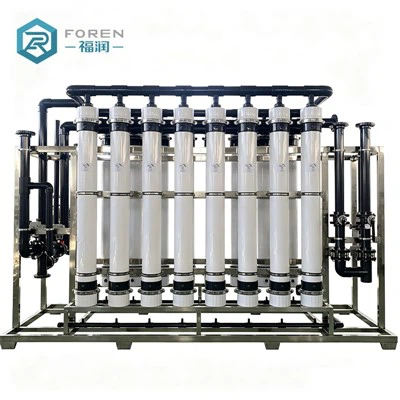
Membrane technology has grown popular in our industry, but not every membrane suits every project. Ultrafiltration, or UF, works well when clients only need to remove suspended particles, colloids and bacteria, as its pore size sits around 0.01 micrometers and lets dissolved salts pass through. Reverse osmosis, RO, is the go-to choice when we need to cut down most dissolved solids and heavy metals; its tiny pores, smaller than 0.001 micrometers, can reject over 95% of these impurities under pressure. Nanofiltration, NF, sits between UF and RO, usually picked for jobs targeting divalent ions and organic matter. For ultra-pure water required in pharmaceutical or electronic manufacturing, we often pair RO with EDI systems. It is worth noting that this combined setup raises project costs, so we will only recommend it when the client's process truly calls for such strict water quality.

Broadly speaking, water treatment systems can be grouped into feed water treatment and wastewater treatment. Feed water treatment helps upgrade water for direct use, covering domestic drinking water and industrial process water. A branch we deal with frequently connects to thermal systems: boiler makeup water, turbine condensate treatment and circulating water systems. I have witnessed boiler failures caused by poorly controlled feed water hardness. Scale builds up steadily inside pipes, dragging down heat efficiency, and in the worst cases, it leads to pipe bursts. Circulating water with unregulated algae and corrosive ions will slowly eat away heat exchangers, creating costly unplanned downtime.
Wastewater treatment is a different challenge. Instead of preparing water for production, it cleans polluted water so it can be discharged legally or reused. Environmental rules keep getting stricter year after year, pushing more factories to explore water reuse schemes. After proper treatment, wastewater can serve equipment cleaning, cooling and landscape irrigation. This cuts fresh water intake and lowers wastewater discharge fees. For factories located in water-scarce zones, zero-liquid-discharge solutions are attractive, though such systems also require higher investment and regular maintenance.
The value of water treatment facilities goes far beyond meeting regulatory requirements. Stable water quality keeps product output consistent and extends the service life of filling lines, boilers and other core equipment. If water conductivity fluctuates constantly on a beverage filling line, the taste of finished bottled drinks will shift, which hurts brand reputation. Unstable hardness for boiler water makes scaling hard to predict. Good water treatment helps lock these variables down, so plant managers can run their lines with less anxiety.

We also cannot overlook the bigger picture of water conservation. China has relatively limited water resources per capita, roughly one quarter of the global average. Industrial water consumption remains high, and local authorities keep rolling out policies to encourage recycled water and other unconventional water resources. None of these conservation goals can be achieved without reliable RO, UF, EDI and water reuse systems.
To sum up, water treatment equipment is not just a standalone machine. It forms a full engineering system that turns raw water into usable water, balancing treatment effect, energy use, maintenance work and consumable replacement. When factory owners invest in a suitable water treatment system, they are not simply buying hardware. They are buying peace of mind for stable, continuous production in the years ahead.